
Artist Tracey Maras explains the many stages of commission portraiture.
By Tracey Maras
Commissions can be a love/hate relationship for artists. They can be a more guaranteed revenue stream, rather than waiting and hoping for a sale of a piece of artwork already created. Some artists avoid commissions because they feel it stifles their creativity.
Undertaking a commission can have its challenges. Often, we are working from someone else’s photos, which may be out of focus, poorly lit, or simply awkward. And ultimately, we are painting to the buyer’s satisfaction, sometimes requiring multiple edits before the painting is completed.
But I find challenges to be part of the adventure.
I was approached to create a portrait of Roxie, a beloved pet who had passed away. A couple was going to be celebrating their 50th wedding anniversary, and dear friends of theirs wished to have the portrait made as a gift.
Challenge #1: Roxie had passed away. Therefore, getting additional photos would not be an option. The friends had a few photos from which to work.
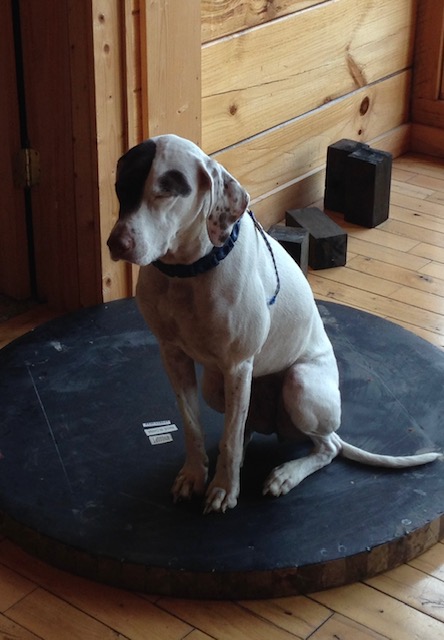
Reference image of Roxie in shadow.
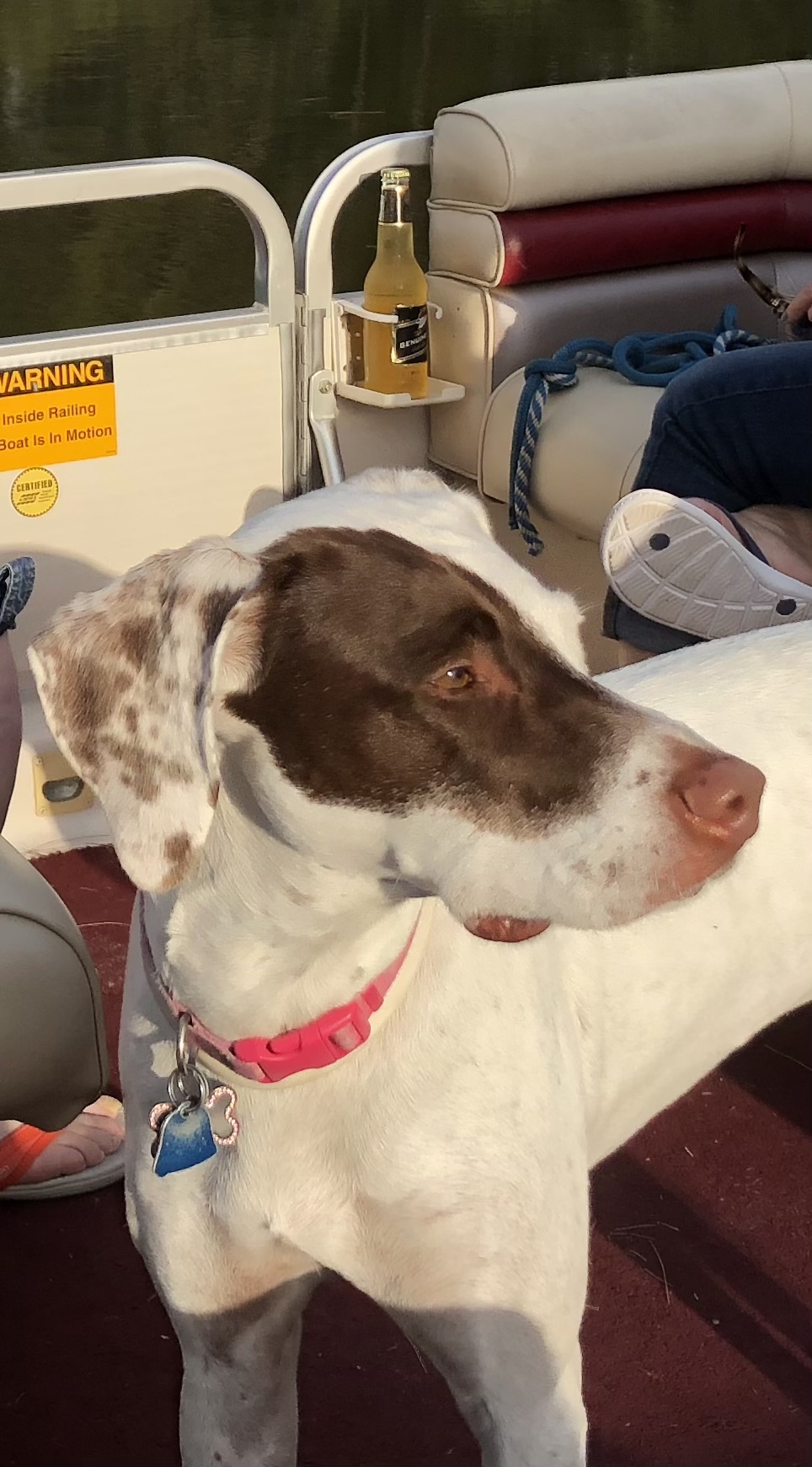
Reference image of Roxie in sun.
Challenge #2: A timeline to have the painting done for a specific date.
Challenge #3: The friends had a specific posture of Roxie in mind, neither of which was exact in the photos.
Challenge #4: The lighting between the two photos was inconsistent.
Challenge #5: The painting would need to be a carry-on for an airplane flight.
Okay. No problem. Let’s do this.
I began the project with some sketches to attempt to integrate the desired posture, an invented environment, and a consistent lighting source. Critical to any commissioned portrait is accuracy. In this case, accuracy was needed in Roxie’s proportions, her coloring, and a multitude of strong and subtle spots on her coat. Equally critical is conveying the subject’s personality through an appropriate environment, the subject’s posture and expression, and the sparkle in the eyes.
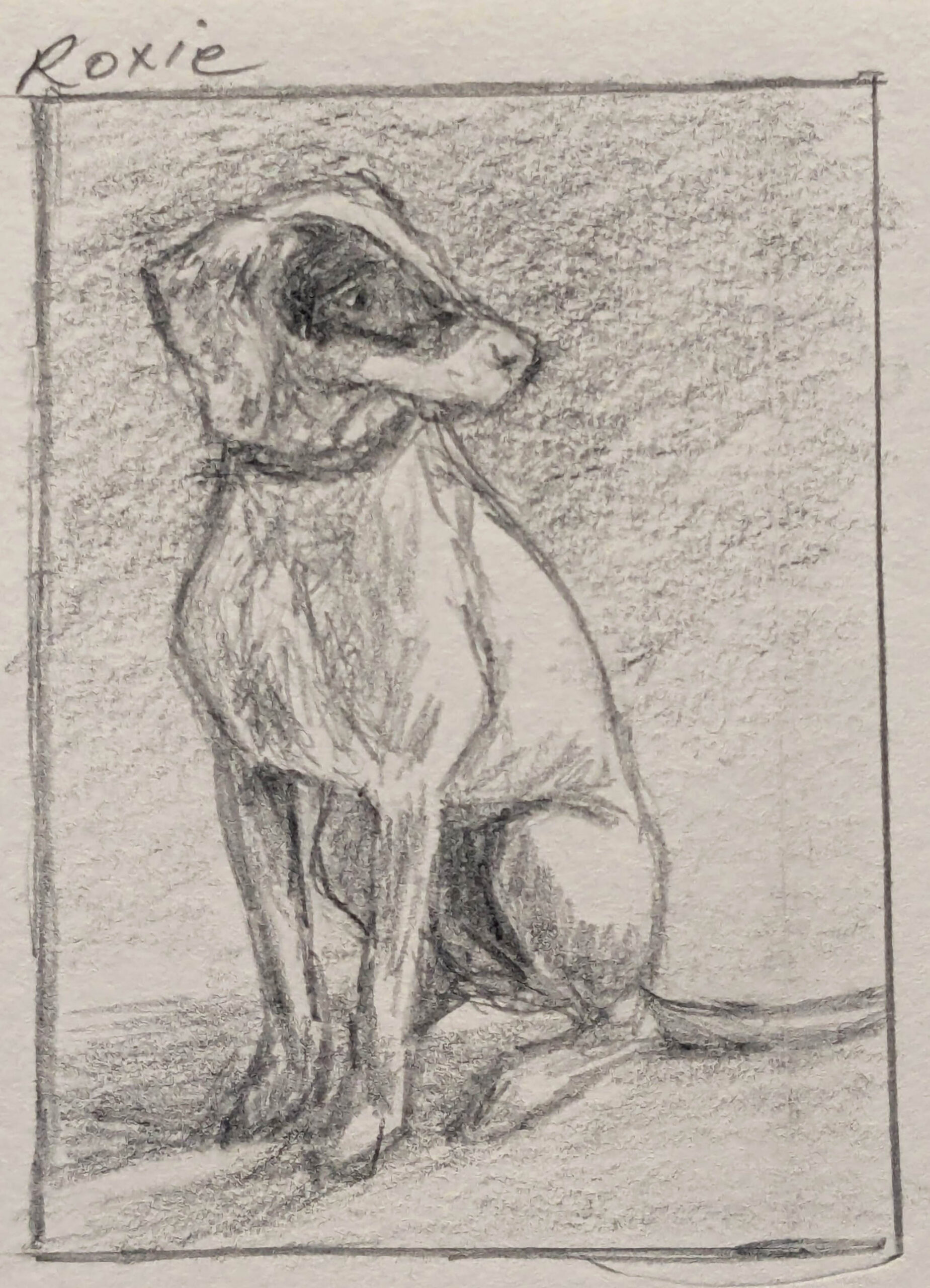
Artist’s sketch of Roxie.
Since the limits for a carry-on on a flight was 14×18, we opted to leave this unframed to maximize the size of the painting to 12×16. It would be safely transported, sandwiched between two pieces of Foamcore with instructions on handling the painting for framing.
After receiving confirmation from the friends that the preliminary sketch captured Roxie and her personality well, the painting process could begin. Using the shadowed reference photo for fur colors in shadow and the sunlit photo for colors in sun, the color palette was established.
As Roxie approached completion, I sent a photo update to the friends to make sure this was Roxie. I had already verified which collar color was preferred. I chose to personalize it further by the addition of Roxie’s name engraved on the sparkly dog tag.
After final approval by the friends of the completed painting, it was off on its cross-country journey to an anniversary celebration.
I’ve received updates since Roxie’s arrival at the celebration. Tears of happiness upon the reveal. A visit to a professional framer.
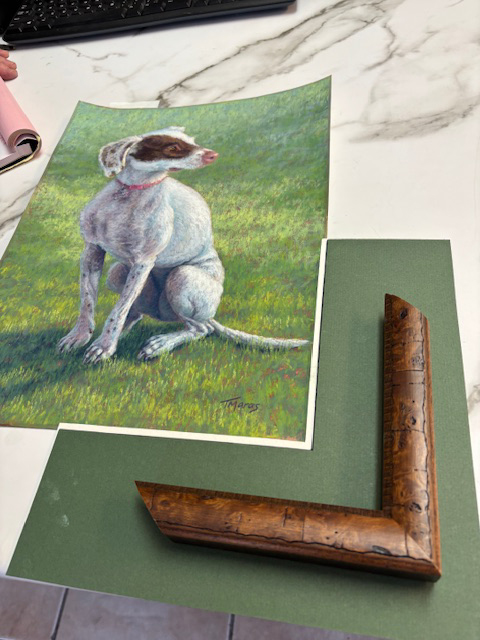
Upon approval by the client, the painting is off to the framer.
More tears at what the final presentation would look like. And I’ll receive an update when Forever Roxie is displayed in her forever home
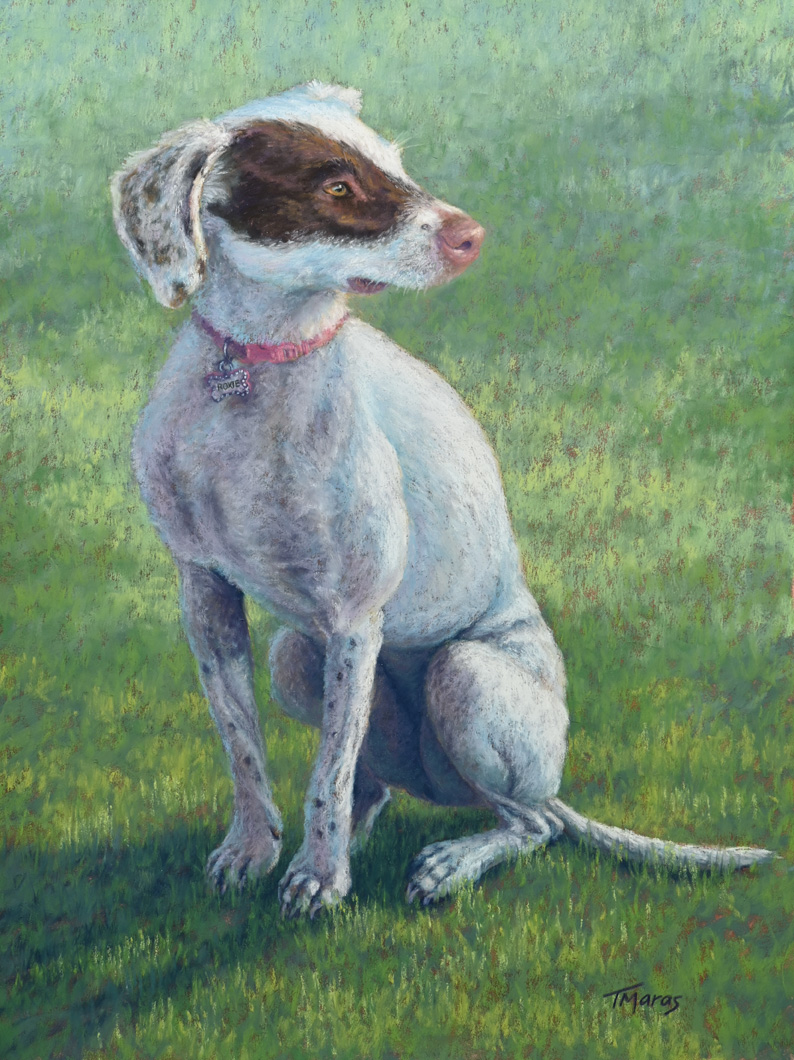
“Forever Roxie,” by Tracey Maras. The commission is completed.
Honestly, the tears of happiness and joy outweigh any of the challenges of doing a commission. Being able to give back cherished memories is largely what commissions are all about. I can think of few things that make my work as an artist more satisfying than to bring happiness to someone.