
Two Central Illinois artists – one who works in pastel, the other in photography – will open Heartland Art Club’s new Solo Series.
By Kara Dicker
Beginning this month, Heartland Art Club will open its new Solo Series with a special exhibit featuring the works of Signature members Tracey Maras (pastel) and Harry Starr (photography).
A Reverie in Tonalism, July 8-Oct. 3, will exhibit 24 pieces depicting the paired artists’ interest in the subdued colors, quiet shadows, and ethereal mist evocative of the natural landscapes they’ve encountered. It is the inaugural show in the Solo Series, which highlights a body of work from HAC’s Signature Members, and will be displayed inside the recently expanded upstairs gallery. The opening reception will be July 11, 3-5 p.m., and will coincide with the new Group of Eight opening that afternoon. Proceeds from the show will benefit Illinois’ Animal Control and Adoption Center of Macoupin County and the Animal Protection League in Springfield, which suffered severe tornado damage this spring.
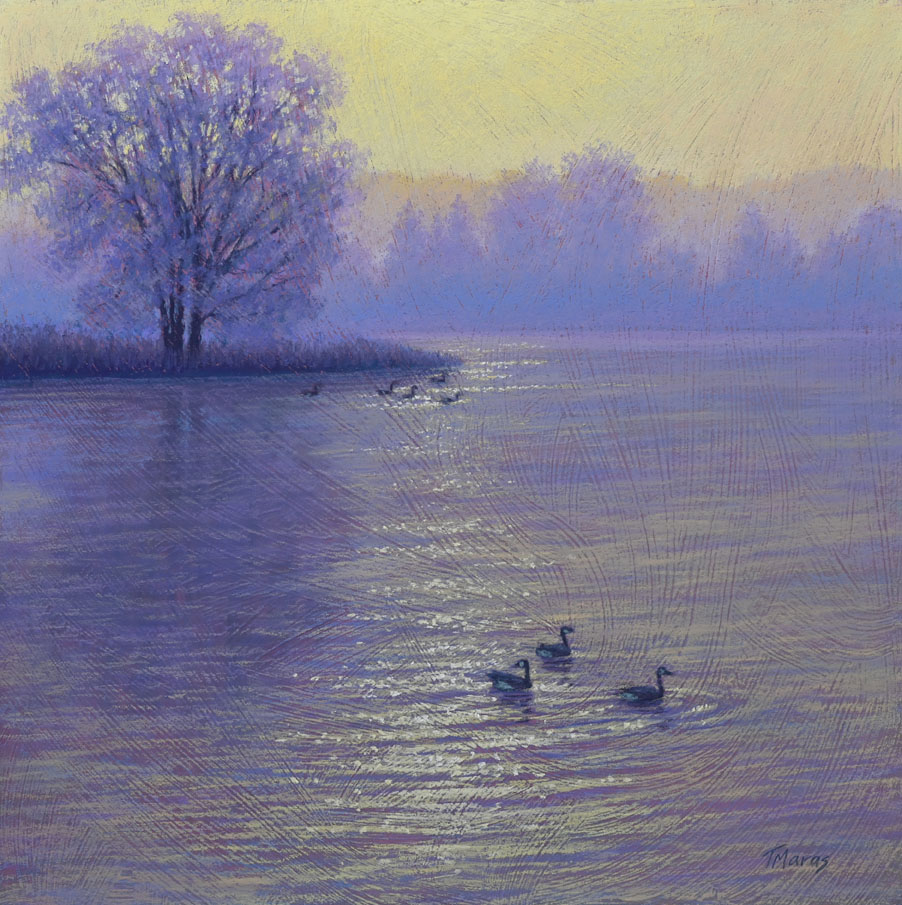
“Amethyst,” 16 x 16, pastel, by Tracey Maras
Executive Director Elizabeth (Lily) Moreland couldn’t be more excited about this show. “The soft yet distinctive Tonalism that Harry Starr’s photography portrays is beautifully matched with Tracey Maras’ dreamlike pastels,” she says. “What a brilliant pairing. I am excited to see these two artists join a special exhibit in our gorgeous showroom. It is a perfect exhibit for summer, and not to be missed.”
Known for her color palette of velvety cool blues, violets, and greens, Maras’ landscapes and wildlife depictions contain an underlying theme of nurturing, reflective not only of her background as an occupational therapist, teacher, and long-time volunteer with wildlife rescue programs, but also of the post-Civil War Tonalist movement with which she identifies as an artist.
“Tonalism was very much about a process of healing,” Maras explains. Unlike the Impressionists, who celebrated with light, Tonalists, she notes, turned to the quieter, more muted spaces of nature. “It was how American artists interpreted what society needed at that time. Today, there are a lot of artists stepping back into Tonalism and embracing it.”
“Amethyst,” a 16 x 16 landscape in Maras’ signature color palette, is one of two paintings in the show inspired by a morning walk in the Lake National Forest in Kentucky. As lovely as the painting is, the reverie in her description of the sunrise encounter is equally stunning: “The sun was glowing through a veil of mist, and it was silent, truly silent. This is with the exception of the occasional voices of geese gently floating along the river.”
Maras, who resides in Springfield, is internationally recognized. Unison Colour, a British manufacturer of hand-rolled pastels, recently chose her as one of 10 artists whose work will be represented on the wall inside its new headquarters. To honor this achievement, the company created a color palette named for each artist. The “Tracey Maras” set will contain 36 pastels that typically show up in her paintings. “A lot of my colors that went into the set are the cool analogous colors, warm complementary colors, and a good range of values, darks to lights,” she reveals. At the time of this interview, Maras was testing her selection by creating a painting only using her chosen pastels.
Meanwhile, Maras says she is appreciative of HAC: “I am in several galleries in Illinois. When I looked at a larger metropolitan area, I looked at St. Louis. Not only was Heartland supportive of pastel as a medium, but the fact that they were representational was the selling point for me.”
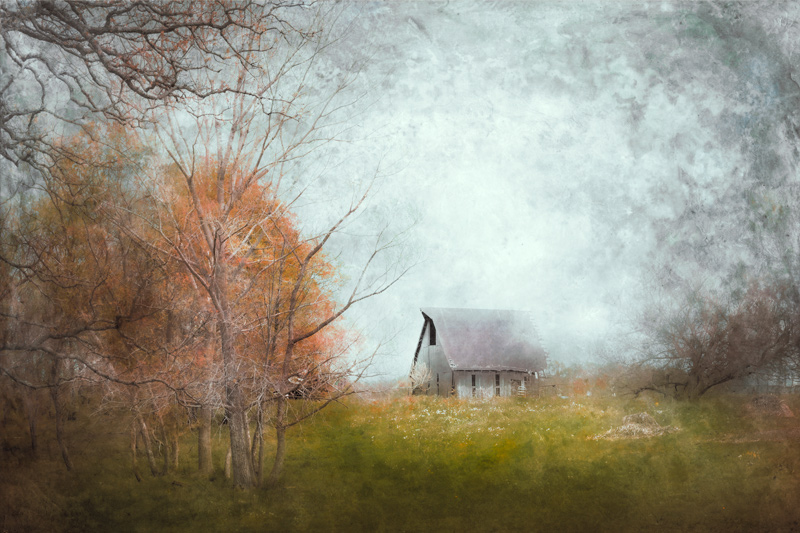
“The House of Nock,” 18 x 12, photograph, by Harry Starr
Harry Starr’s rural landscape photographs are often mistaken for paintings. “Historically, that’s the response I would get,” he says. “I always took it as a compliment.”
A former custom motorcycle and motocross racing photographer, Starr transitioned in 2008 to chase the natural beauty around his native Carlinville, Illinois. Since then, there’s never been an abandoned barn, field of hay bales, or quiet lake that hasn’t escaped his camera lens.
“This is so much nicer,” he says. “You see something, you pull over, shoot it, and then bring it to life.”
Starr scouts photo opportunities by traveling in his truck alongside his dog, a lab mix aptly named Nikon. Even the roads he’s driven extensively never lack for something worth photographing. “There’s always something interesting,” he says. “The perspective is always changing.”
Embracing the painterly quality of his work, Starr recently began exploring new ways to process his images. “I was always a big fan of fog, but at the same time, that limited me so much,” he says, referring to the whims of Mother Nature. While strictly opposed to the use of AI, Starr uses basic Photoshop to soften edges, accentuate a detail, or add layers of texture. Now, when it comes to obscuring a detail or softening an edge, “I’m no longer fog dependent.”
Among his photographs in the show is “House of Nock,” 18 x 12, which features a small barn Starr discovered tucked behind trees and green meadows. “I quickly envisioned a piece that could spark curiosity, taking one on an unfamiliar journey that goes beyond imagination to a place both beautiful and peaceful,” Starr says.
Starr said it was Maras who approached him about exhibiting together after seeing his work at HAC. When they met in person nearly a year ago, Starr said he was struck by how much they had in common in terms of subject matter, love for animals, and lifelong residents of Central Illinois.
“I’m really honored that Tracey asked me to be a part of this show,” he says. “I’m also grateful to Heartland Art Club for all of its support over the years.”
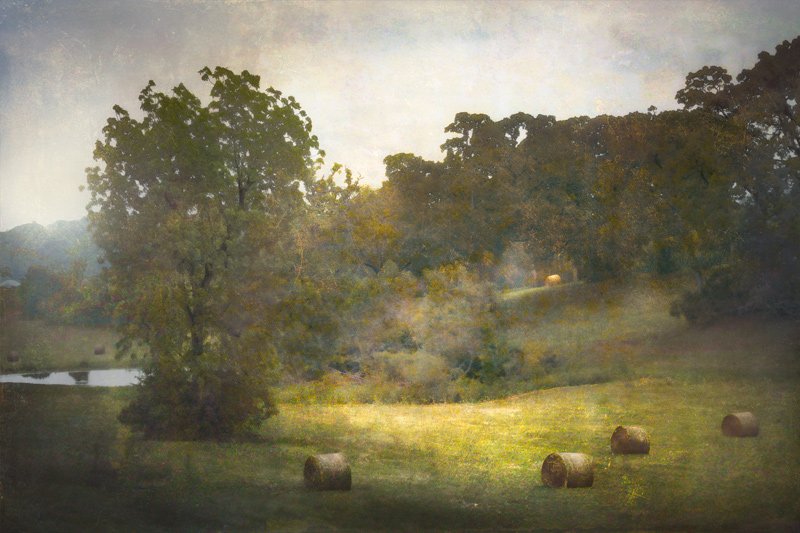
“Breaking Through,” 30 x 20, photograph, by Harry Starr